A Practical Problem-Solving Guide by Snappy Response Waste
Learn why commercial waste management is essential for businesses, covering legal risks, hidden costs, safety issues, recycling problems, and practical solutions in a simple guide.
1. Understanding the Real Problem Behind Commercial Waste
Commercial waste is not just “rubbish generated by a business” — it is a growing operational problem that affects efficiency, cost, safety, and compliance. Most businesses do not notice how quickly waste accumulates until it becomes disruptive. Office paper, packaging, food waste, broken equipment, and production materials build up daily, and without a proper system, this leads to cluttered spaces and disorganized operations. The real problem is not waste itself, but the lack of structure in handling it. When businesses ignore waste management, it creates hidden inefficiencies such as wasted storage space, increased cleaning time, and higher disposal costs. Employees also become less productive in cluttered environments. Over time, unmanaged waste becomes a silent business risk that affects operations without being immediately obvious. Snappy Response Waste helps businesses understand that waste is not just disposal—it is a system that needs planning, monitoring, and continuous improvement to prevent long-term operational issues.
2. Why Most Businesses Don’t Notice Waste Problems Early
One of the biggest challenges with commercial waste is that problems develop gradually rather than suddenly. Businesses rarely notice waste issues until bins overflow, storage rooms become full, or collections become inconsistent. This delay makes the problem harder and more expensive to fix. Many companies assume waste management is working fine as long as waste is being removed, but they fail to analyze efficiency, cost control, and recycling performance. This lack of awareness leads to unnecessary expenses and operational inefficiencies. For example, businesses often overpay for frequent collections or miss opportunities to reduce waste volume through better segregation. Another issue is that employees are not always trained to manage waste correctly, which leads to mixing recyclable and non-recyclable materials. Snappy Response Waste highlights that early identification of waste problems can significantly reduce long-term costs and improve workplace efficiency. Regular audits and structured systems help prevent small issues from turning into major operational challenges.
3. Legal Responsibilities Every Business Must Understand
Commercial waste management is governed by strict legal requirements in the UK, and many businesses are unaware of their full responsibility. Under “duty of care” regulations, a business remains responsible for its waste even after it has been collected. This means if waste is disposed of illegally by an unlicensed carrier, the business can still face penalties. This is one of the most misunderstood areas of waste management. Businesses must ensure waste is handled only by licensed waste carriers and properly documented using waste transfer notes. Failure to comply can lead to fines, legal action, or reputational damage. Many companies unknowingly expose themselves to risk by choosing low-cost, unverified disposal services. Snappy Response Waste ensures full compliance by following legal procedures and maintaining proper documentation for all waste handling processes. Understanding legal responsibilities is not optional—it is essential for protecting the business from avoidable risks and penalties.
4. The Hidden Financial Impact of Poor Waste Management
Poor commercial waste management often leads to unnecessary financial losses that businesses do not immediately recognize. One of the biggest cost drivers is inefficiency—mixing recyclable materials with general waste increases landfill charges, while poor scheduling leads to overpaying for emergency collections. Many business owners search for answers to how much does rubbish removal cost UK, but the real issue is often waste structure rather than pricing. When waste is not managed correctly, businesses lose opportunities to reduce volume and recycling efficiency. Over time, this leads to higher operational costs that could have been avoided with a proper system. Another hidden cost is wasted space, as businesses often use valuable storage areas for unmanaged waste. Snappy Response Waste helps businesses identify these inefficiencies and build cost-effective systems that reduce waste volume, improve recycling rates, and optimize collection schedules, turning waste management into a controlled and predictable expense.
5. How Waste Affects Workplace Safety and Productivity
Commercial waste directly impacts workplace safety and employee productivity. Overflowing bins, cluttered storage areas, and improperly stored waste can create fire hazards, attract pests, and increase accident risks. In busy environments such as offices, retail stores, or warehouses, these risks become even more significant. Employees working in cluttered spaces are more likely to experience stress, distraction, and reduced efficiency. Poor waste management can also lead to hygiene issues, especially in food-related or healthcare environments. Maintaining clean and organized spaces is essential not just for compliance but also for operational performance. Proper waste handling reduces risk, improves workflow, and creates a more professional environment. Snappy Response Waste supports businesses in maintaining safe workplaces through structured collection and disposal systems that reduce hazards and improve daily operational conditions.
6. Recycling Problems Businesses Commonly Face
Although most businesses understand the importance of recycling, many struggle to implement it effectively. The main issue is not intention but execution. Waste is often mixed together due to lack of clear segregation systems, making recycling difficult or impossible. This leads to recyclable materials being sent to landfill unnecessarily. Another issue is lack of employee awareness or training on proper waste sorting. Businesses also fail to optimize recycling opportunities due to inconsistent collection systems. As a result, sustainability goals are not met, and disposal costs increase. Snappy Response Waste emphasizes that effective recycling starts with simple systems such as clear labeling, separation of waste streams, and regular monitoring. When properly implemented, recycling not only reduces environmental impact but also lowers operational costs and improves business sustainability performance.
7. Waste and Its Impact on Business Reputation
A business’s waste management practices directly influence how customers perceive its professionalism and responsibility. Clean and well-maintained premises create a positive impression, while visible waste issues can damage trust and credibility. In today’s market, customers are increasingly environmentally conscious and prefer businesses that demonstrate sustainability. Poor waste handling can quietly harm reputation over time, even if the core service or product is strong. Businesses that invest in proper waste systems often gain a competitive advantage by appearing more organized and responsible. Snappy Response Waste helps businesses maintain strong reputations by ensuring clean operations and environmentally responsible waste practices that align with modern customer expectations.
8. Common Daily Waste Challenges in Businesses
Most businesses face recurring waste challenges that seem small individually but become significant over time. These include overflowing bins, inconsistent collections, lack of storage space, and unclear recycling procedures. Offices struggle with paper and electronic waste, retail stores deal with packaging waste, restaurants manage food waste, and construction sites handle mixed heavy materials. Without a structured system, these challenges repeat daily and disrupt operations. Businesses often react to waste problems instead of preventing them, which leads to inefficiency. Snappy Response Waste helps businesses move from reactive to proactive waste management by creating structured systems tailored to their operational needs.
9. Practical Steps to Improve Waste Management
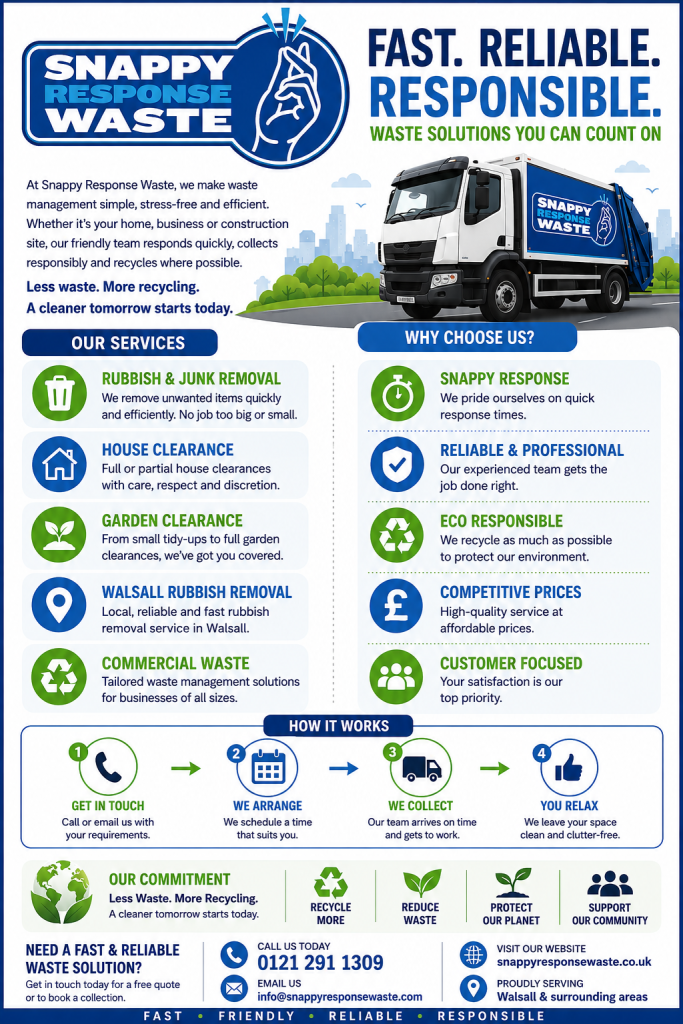
Improving commercial waste management does not require complex systems. Simple steps can create significant improvements. Businesses should start by identifying waste types and separating recyclable materials from general waste. Staff training plays an important role in ensuring correct disposal practices. Scheduling regular collections helps prevent overflow issues and improves efficiency. Waste audits can identify unnecessary waste generation and highlight cost-saving opportunities. Businesses can also benefit from services like Rubbish and Junk Removal for bulky items and clearance needs. For property-related waste situations, services such as house clerance garden clerance walsall rubbish removal provide additional support. These small but consistent improvements help build a more efficient waste system.
10. Why Waste Management Is a Strategic Business Function
Waste management should not be treated as a background task—it is a strategic part of business operations. Efficient waste systems improve workflow, reduce costs, and enhance compliance. Businesses that actively manage waste gain better control over resources and operational efficiency. Poor waste systems, on the other hand, create ongoing problems that drain time and money. Treating waste as a structured process rather than an afterthought leads to better long-term performance. Snappy Response Waste helps businesses integrate waste management into their operational strategy, ensuring it supports growth rather than creating disruption.
11. Role of Professional Waste Management Services
Professional waste services provide expertise, compliance assurance, and operational efficiency that most businesses cannot achieve internally. Regulations change frequently, and staying compliant requires up-to-date knowledge. Professional providers handle documentation, licensing, collection schedules, and disposal processes. This reduces risk and ensures consistency. Snappy Response Waste offers tailored solutions that help businesses focus on their core operations while ensuring waste is handled responsibly and legally. Professional support also helps businesses scale their waste systems as they grow.
12. Long-Term Benefits of Proper Waste Management
Proper commercial waste management delivers long-term benefits including cost savings, improved safety, regulatory compliance, and environmental sustainability. Businesses that invest in structured waste systems experience fewer operational disruptions and better resource management. Over time, recycling improvements and waste reduction strategies significantly lower disposal costs. It also enhances brand image and customer trust. Sustainable waste practices are no longer optional—they are a key part of modern business success.
13. Conclusion
Commercial waste management is a critical part of running an efficient and responsible business. The problems caused by poor waste systems include hidden costs, safety risks, legal issues, and reputational damage. However, these problems can be avoided through structured planning, recycling systems, and professional support. Businesses that take waste seriously gain long-term financial and operational advantages. Snappy Response Waste provides reliable, compliant, and efficient waste solutions designed to help businesses stay organized, safe, and sustainable.
FAQs
1. What is commercial waste management?
It is the structured process of collecting, recycling, and disposing of business waste.
2. Why is commercial waste a problem for businesses?
Because it creates hidden costs, safety risks, and compliance issues if unmanaged.
3. Is commercial waste legally regulated?
Yes, UK businesses must follow strict duty of care regulations.
4. What causes waste management problems?
Lack of structure, poor segregation, and inconsistent collection systems.
5. How does waste affect business costs?
Inefficient systems increase disposal and operational expenses.
6. Why is recycling difficult for businesses?
Because waste is often not properly separated at the source.
7. What is Rubbish and Junk Removal used for?
It handles bulky or unwanted business waste efficiently.
8. What is house clerance garden clerance walsall rubbish removal?
It is used for property, garden, and external waste clearance.
9. How can businesses improve waste systems?
By separating waste, training staff, and scheduling regular collections.
10. Do businesses need professional waste services?
Yes, for compliance, efficiency, and proper disposal management.
Need help solving your business waste problems?
Contact Snappy Response Waste today for reliable, compliant, and cost-effective commercial waste solutions tailored to your business needs.