Introduction
Proper waste management is something most people don’t think about until they have more rubbish than their regular bin can handle. Whether you’re renovating your home, clearing out an office, landscaping your garden, or simply decluttering after years of accumulated belongings, disposing of waste responsibly becomes an important task. Unfortunately, many people underestimate the time, effort, and legal responsibilities involved. Illegal dumping, overfilled bins, and incorrect disposal methods can lead to environmental damage, unnecessary fines, and health hazards. Choosing a professional waste disposal company not only saves valuable time but also ensures rubbish is handled safely and in accordance with UK environmental regulations. This guide explains everything you need to know about modern waste disposal, including the different types of waste, common disposal mistakes, how to reduce costs, and why responsible waste management benefits both individuals and businesses.
What Is Waste Disposal?
Waste Disposal is the process of collecting, transporting, treating, recycling, and safely disposing of unwanted materials. It involves much more than simply removing rubbish from a property. Different waste types require different handling methods to minimise environmental impact and comply with UK legislation. Household rubbish, garden waste, construction debris, furniture, electrical appliances, office waste, and commercial materials all have specific disposal requirements. Professional waste disposal companies sort recyclable materials, separate hazardous items where necessary, and transport waste to authorised recycling or treatment facilities. Responsible waste management helps reduce landfill usage while recovering valuable materials that can be reused or recycled. Whether you’re clearing a single room or managing waste from a commercial project, choosing the correct disposal method ensures your waste is handled efficiently, legally, and with minimal impact on the environment.
Why Proper Waste Disposal Matters
Many people assume that once rubbish leaves their property, their responsibility ends. In reality, improper waste disposal can have serious consequences for both the environment and local communities. Fly-tipping damages public spaces, attracts pests, creates health risks, and places additional financial pressure on local councils responsible for clearing illegally dumped waste. Certain materials, such as electronics, chemicals, paints, and batteries, require specialist handling because they contain substances that may contaminate soil or water if disposed of incorrectly. Responsible waste disposal also supports recycling initiatives by ensuring recoverable materials remain within the recycling system instead of ending up in landfill. Every household and business has an important role in reducing waste and improving environmental sustainability. Choosing licensed waste professionals helps ensure that materials are sorted, recycled wherever possible, and disposed of responsibly according to current UK regulations.
Common Waste Disposal Challenges for Homes and Businesses
Managing waste isn’t always as straightforward as filling a wheelie bin. Homeowners often struggle with bulky furniture, renovation debris, garden waste, or unwanted appliances that cannot be collected through standard household services. Businesses face additional challenges, including larger waste volumes, confidential document disposal, construction waste, and strict legal responsibilities regarding commercial waste management. During office relocations, property renovations, or seasonal clear-outs, waste can accumulate much faster than expected, making efficient removal essential. Limited transport, lack of suitable equipment, and uncertainty about local disposal regulations often add to the difficulty. Without proper planning, waste can quickly become both an inconvenience and a safety hazard. Understanding these common challenges allows property owners to select appropriate waste removal services that save time while ensuring compliance with environmental regulations.
How to Reduce Waste Before Disposal
Reducing waste before arranging collection is one of the simplest ways to lower disposal costs while helping the environment. Before throwing items away, consider whether they can be reused, donated, repaired, or recycled. Furniture in good condition may be suitable for charities, while unwanted clothing, books, and household goods often have value to others. Separating recyclable materials such as cardboard, paper, glass, plastics, and metals before collection improves recycling rates and reduces landfill waste. Businesses can also minimise waste through better inventory management, digital documentation, and improved packaging practices. Even small changes, such as purchasing reusable products or reducing unnecessary packaging, contribute to long-term environmental benefits. Taking time to reduce waste at its source not only lowers disposal costs but also supports more sustainable waste management practices across local communities.
Why Property Owners Choose Snappy Response Waste
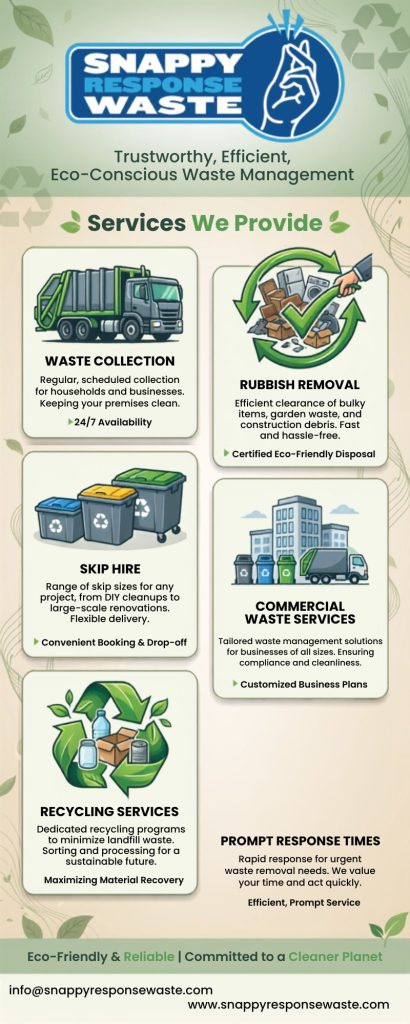
When dealing with unwanted rubbish, reliability and professionalism are just as important as speed. At Snappy Response Waste, we understand that every waste clearance project is different. Some customers need a single bulky item removed, while others require complete property clearances following renovations, office relocations, or tenancy changes. Our approach focuses on providing efficient waste collection while ensuring materials are handled responsibly and recycled wherever possible. We believe waste removal should be straightforward, environmentally responsible, and stress-free for every customer. By planning collections carefully and following responsible disposal practices, we help homeowners, landlords, businesses, and property managers clear unwanted waste without unnecessary delays or complications. Our commitment to dependable service and environmentally conscious waste management allows customers to focus on their projects while knowing their waste is being handled professionally.
How Professional Waste Removal Saves Time and Money
Many people initially believe that handling waste themselves will be cheaper than hiring professionals. However, once fuel costs, vehicle hire, disposal fees, loading time, and multiple trips to recycling centres are considered, DIY waste removal often becomes more expensive than expected. There is also the physical effort involved in lifting heavy furniture, construction debris, or large garden waste, which increases the risk of injury. Professional waste removal services simplify the entire process by collecting, loading, transporting, and disposing of waste in a single visit. This not only saves valuable time but also ensures that waste is processed correctly and recycled wherever possible. Businesses benefit by avoiding disruptions to daily operations, while homeowners can focus on completing their renovation or clearance project without worrying about logistics. Investing in professional waste removal often proves more cost-effective than attempting to manage large quantities of waste independently.
Understanding the Importance of Recycling
Recycling has become one of the most effective ways to reduce landfill waste and conserve natural resources. Many materials that people throw away every day—including metals, cardboard, plastics, timber, and glass—can often be processed and reused to manufacture new products. Proper recycling reduces energy consumption, lowers greenhouse gas emissions, and decreases the demand for raw materials. However, effective recycling depends on waste being sorted correctly before processing. Mixing recyclable materials with general waste often results in valuable resources being sent to landfill unnecessarily. Professional waste management companies play an important role by separating recyclable materials wherever practical before transporting the remaining waste to authorised disposal facilities. By improving recycling rates, households and businesses contribute to a cleaner environment while supporting the UK’s long-term sustainability goals. Small recycling decisions made today have a positive environmental impact for future generations.
Why Customers Trust Snappy Response Waste
Choosing a waste removal company involves much more than finding someone to collect unwanted rubbish. Customers want a service they can rely on, knowing their waste will be handled responsibly, collected promptly, and disposed of in accordance with environmental regulations. At Snappy Response Waste, we understand that every clearance project presents different challenges. Some involve household decluttering, while others include office clearances, renovation waste, or commercial property clean-ups. Our focus is always on providing dependable collections while recycling as much material as possible to minimise landfill waste. We believe professional waste management should offer convenience without compromising environmental responsibility. By combining efficient collections with responsible disposal practices, we help customers complete their projects with confidence while ensuring waste is managed safely, legally, and sustainably from collection through to final processing.
When Should You Consider a House Clearance?
There are many situations where a standard rubbish collection simply isn’t enough. A House Clearance is often the most practical solution when clearing an entire property rather than removing individual items. This may be necessary after moving home, following a bereavement, preparing a property for sale, renovating multiple rooms, or helping tenants vacate rented accommodation. Large-scale clearances often involve bulky furniture, unwanted appliances, clothing, household goods, and general accumulated belongings collected over many years. Attempting to manage these projects alone can be time-consuming and physically demanding. Professional clearance services streamline the process by removing everything efficiently while ensuring reusable and recyclable items are separated wherever possible. This allows homeowners, landlords, estate agents, and property managers to prepare properties quickly without the stress of arranging multiple waste collections or disposal trips.
Common Waste Disposal Mistakes to Avoid
Many waste disposal problems occur simply because people are unaware of the correct procedures. One of the most common mistakes is mixing recyclable materials with general household waste, making recycling more difficult and increasing landfill volumes. Others attempt to dispose of hazardous materials such as paint, batteries, chemicals, or electrical appliances through standard waste collections, despite these items requiring specialist treatment. Fly-tipping is another serious issue that damages the environment and can result in significant penalties. Some property owners also underestimate how much waste their project will generate, leading to delays and additional collection costs. Planning ahead, separating recyclable materials, and using licensed waste professionals are some of the simplest ways to avoid these common mistakes. Responsible waste management not only protects the environment but also saves time, money, and unnecessary complications.
Frequently Asked Questions
What is waste disposal?
Waste disposal is the safe collection, transportation, recycling, treatment, and removal of unwanted household or commercial materials.
Why is proper waste disposal important?
Responsible waste disposal protects the environment, reduces landfill waste, supports recycling, and ensures compliance with UK regulations.
What types of waste can be collected?
Most household, garden, office, renovation, and commercial waste can be collected, although hazardous materials may require specialist disposal.
Can waste be recycled instead of sent to landfill?
Yes. Many materials including wood, cardboard, metals, plastics, and glass can often be recycled when sorted correctly.
Is professional waste removal better than hiring a skip?
For many projects, professional collections save time because customers don’t need to load waste themselves or arrange permits for skip placement.
How can I reduce disposal costs?
Sorting recyclable materials, donating reusable items, reducing unnecessary waste, and planning collections efficiently can all help reduce costs.
Is fly-tipping illegal?
Yes. Fly-tipping is illegal throughout the UK and can result in substantial fines and environmental damage.
Do businesses have responsibilities for commercial waste?
Yes. Businesses must ensure their waste is handled responsibly and disposed of through authorised waste management providers.
How often should waste be removed?
This depends on the type of property and waste volume, but regular collections help maintain safe and clean environments.
Where can I learn more about waste regulations?
Many homeowners and businesses use the Environment Agency for trusted guidance on waste management, recycling, and environmental responsibilities.
Conclusion
Effective waste management is about much more than removing unwanted rubbish. Responsible disposal protects the environment, supports recycling, reduces landfill waste, and helps create cleaner communities for everyone. Whether you’re clearing a home, renovating a property, managing business waste, or simply decluttering, choosing the right waste removal service saves time, reduces stress, and ensures waste is handled correctly. By understanding the importance of proper waste disposal and avoiding common mistakes, both homeowners and businesses can contribute to a more sustainable future.
If you’re planning a property clearance, renovation, or need reliable waste collection services, Contact Us today and speak with the team at Snappy Response Waste. We’re here to provide professional, responsible, and efficient waste removal solutions tailored to your needs, helping you clear unwanted waste quickly while protecting the environment.